Marriage Biodata vs. Matrimonial Profile: What’s the Difference?
Last Updated: June 26, 2026
The Modern Arranged Marriage Dilemma
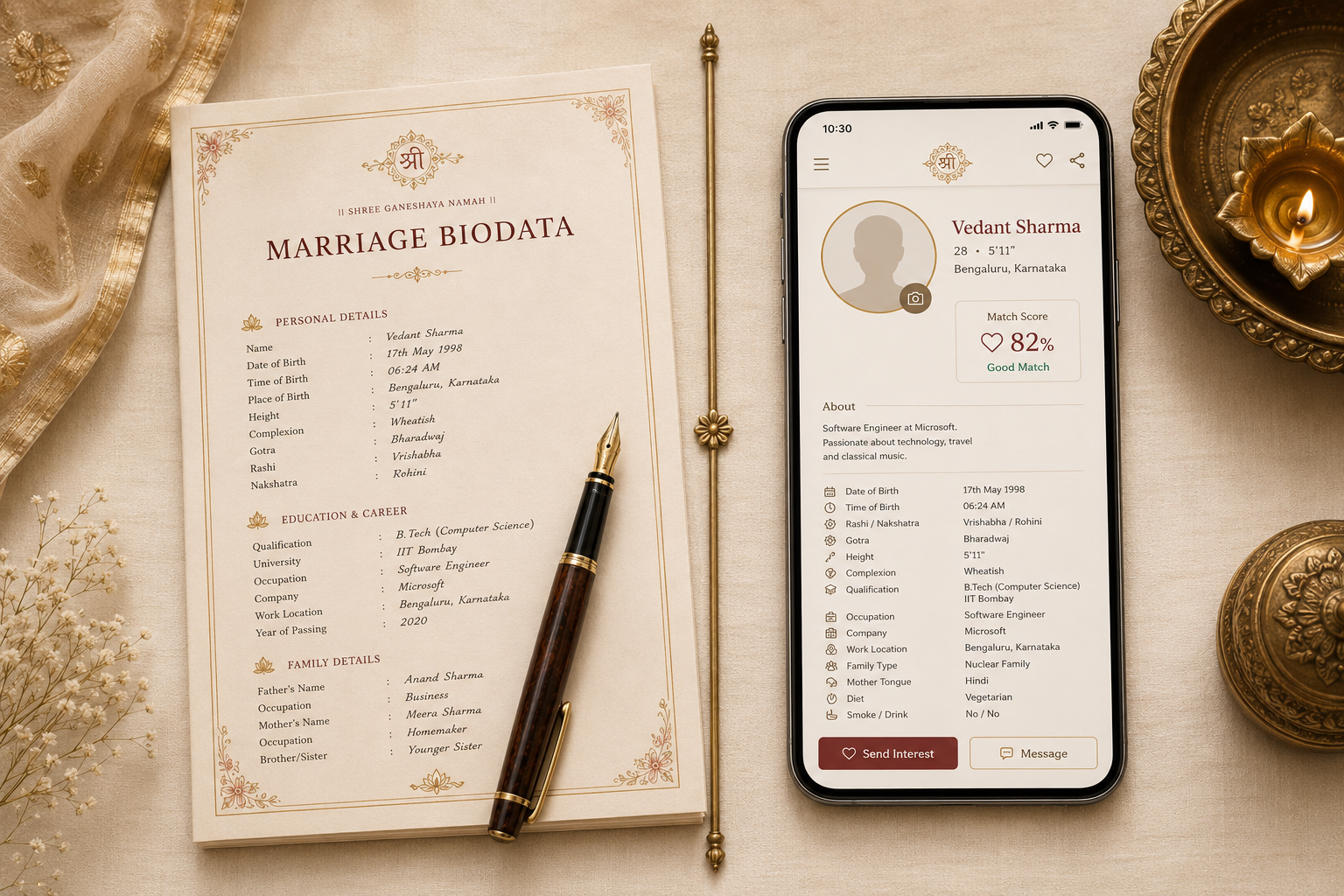
When navigating the Indian matchmaking landscape, you will frequently encounter two terms: Marriage Biodata and Matrimonial Profile. While they serve the same ultimate goal—finding a life partner—they are fundamentally different tools engineered for entirely different settings.
A common mistake many candidates make is copy-pasting their online matrimonial profile text into a messy Word document, or vice versa. Understanding when to use an offline-first PDF versus a dynamic online profile is the key to creating a flawless first impression.
What is a Marriage Biodata? (Offline-First & Family-Facing)
A marriage biodata is a highly structured, self-contained document (typically a 1 or 2-page premium PDF) designed to be shared directly between families. It is heavily favored in traditional matchmaking avenues, such as personal family introductions, community WhatsApp groups, and independent marriage bureaus.
Because a biodata is read directly by parents, elders, and extended relatives, its tone is highly formal and family-centric. It gives equal visual weight to your professional achievements and your family’s background, ancestry, and ancestral roots.
What is a Matrimonial Profile? (Online & Portal-Specific)
A matrimonial profile exists digitally within a dedicated portal or matchmaking app (like Shaadi.com, Jeevansathi, or BharatMatrimony). It is dynamic, algorithm-driven, and designed to filter thousands of candidates based on specific preferences.
Unlike a standalone document, a matrimonial profile is highly personal and conversational. It includes features like "About Me" essays, algorithmic checkboxes, privacy-masked photo galleries, and real-time activity status markers. It is built to stand out to individual prospects who are swiping or filtering through thousands of search results.
Key Differences: Side-by-Side Comparison
Here is a clear breakdown of how a traditional marriage biodata stacks up against an online matrimonial profile across critical touchpoints:
| Feature | Marriage Biodata (PDF) | Matrimonial Profile (App) |
|---|---|---|
| Primary Format | Offline-first (Print-ready PDF / Paper) | Dynamic online database layout |
| Primary Audience | Parents, elders, and family matchmakers | The candidates themselves & algorithm bots |
| Sharing Method | Direct via WhatsApp, Email, or Hand-delivery | In-app link sharing and search filtering |
| Data Privacy | High control; shared only with verified leads | Publicly queryable unless strict premium locks are paid for |
| Editing & Control | Instant offline structural design control | Bound by portal field characters and verification reviews |
When to Use Which: Navigating WhatsApp vs. Portals
Use a Marriage Biodata when: You are communicating directly with a family over WhatsApp, sending a profile through mutual relatives, or presenting details to community elders. In these scenarios, sending a raw web link to a profile looks lazy. A beautiful, well-formatted PDF shows respect and serious intent.
Use a Matrimonial Profile when: You want maximum mass exposure and intend to proactively browse candidates across cities, states, or countries using automated filtering systems.
Why You Need Both for a Successful Search
The truth is, these tools are not mutually exclusive. Successful matchmaking campaigns usually follow a clear blueprint:
- Step 1: You break the ice on matchmaking portals using your online matrimonial profile.
- Step 2: Once both parties express initial interest, the conversation immediately shifts to WhatsApp.
- Step 3: The bride or groom's parents will ask: "Please send your formal biodata and recent pictures for the family elders to review."
If your offline biodata is ready, premium, and visually stunning, you lock down that crucial second-stage family validation instantly.
Create Your Flawless Marriage Biodata
Don't compromise your family's first impression with a plain text file. Build a premium, beautifully typeset marriage biodata PDF designed to impress elders instantly.
Start your biodata — free, no login